
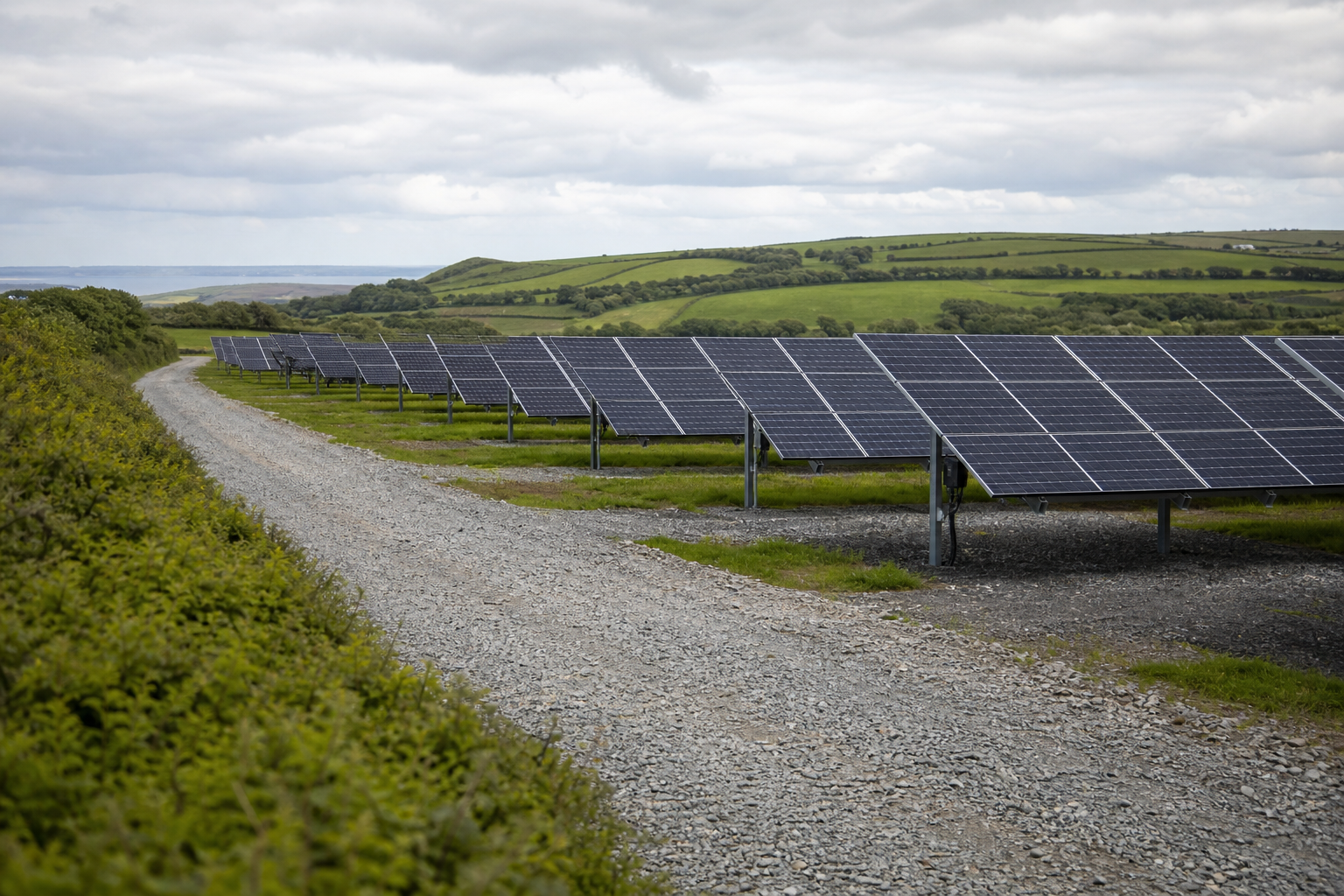
Ground-mounted solar is often easier to maintain than a roof-mounted installation. Panels, cables and mounting components can usually be inspected without arranging roof access, while faulty modules may be simpler to reach and replace.
That does not make every ground-mounted system low maintenance. The design introduces its own requirements, including vegetation control, drainage, security and keeping access routes usable throughout the year. Poor row spacing or unsuitable ground conditions can turn an apparently accessible array into a difficult site to service.
For related work and planning, see our ground-mounted solar services page.
For commercial premises, holiday parks, farms and larger rural sites in Cornwall, the better question is not simply whether panels should go on the roof or the ground. It is whether the complete system can be operated, inspected and repaired safely over its working life.
Why ground mount solar can be easier to maintain
The main advantage is straightforward access. Roof work is hazardous and must be properly planned, particularly where an older commercial or agricultural building has fragile sheets, rooflights or uncertain structural condition. The Health and Safety Executive advises avoiding work on or near fragile roof surfaces wherever reasonably practicable.
A suitably designed ground array can reduce the amount of work that has to be undertaken at height. Depending on its dimensions, technicians may be able to carry out visual checks, testing and some component replacements from ground level or with relatively simple access equipment.
Faster visual inspection
Solar PV maintenance is not limited to looking for dirty panels. An inspection may need to consider modules, connectors, cable support, enclosures, isolators, earthing arrangements, mounting hardware and signs of physical or environmental damage.
With a ground-mounted array, both the front and rear of the modules may be more visible. That can make it easier to identify issues such as damaged glass, loose cable management, vegetation touching equipment or movement within the mounting structure.
Better access for testing and fault finding
Solar arrays should be designed so that electrical equipment can be reached and isolated safely. Relevant maintenance guidance includes BS EN IEC 62446-2, alongside manufacturer instructions and the requirements applying to the connected electrical installation.
Accessible string equipment, inverters and distribution equipment can make testing more practical. Where an output issue has been identified through monitoring, good labelling and a logical array layout can also help technicians trace the affected section without unnecessary disruption.
More practical module replacement
Solar modules are large components and need careful handling. Replacing one on a roof may involve scaffolding, a mobile elevating work platform or other controls for work at height. A ground array can simplify handling, although safe isolation, lifting and site controls are still required.
Access between rows matters here. A system that maximises panel density but leaves little working space may be harder to repair than one designed around realistic maintenance tasks.
Ground-mounted panels create different maintenance work
Ground mounting removes some roof-related complications, but the land becomes part of the solar installation. Its condition can affect access, safety and performance.
Vegetation needs an agreed management plan
Grass, weeds, scrub and self-seeded plants can grow beneath and around an array. If unmanaged, vegetation may shade modules, obstruct access, conceal damage or come into contact with cables and equipment.
Vegetation management should be considered when deciding row spacing, panel height and the position of fences, tracks and electrical equipment. The approach may include cutting, grazing or another site-appropriate regime, but it must also reflect ecology commitments, livestock arrangements and any conditions attached to planning permission.
The aim is not necessarily to keep the whole site closely mown. It is to maintain safe access and prevent unwanted growth from interfering with the installation while managing the land responsibly.
Drainage and year-round access are important
A route that works during a dry survey can become difficult after prolonged rain. Soft ground, standing water and erosion may prevent maintenance vehicles from reaching an inverter or make working around the array unsafe.
Government policy for larger solar developments specifically recognises the need to plan access routes for operation and maintenance. The same principle is useful for smaller commercial and rural systems: consider how people, equipment and replacement components will reach the array in poor weather, not just on installation day.
Ground-level equipment can be exposed to damage
Low-level cables and components may be vulnerable to livestock, wildlife, machinery and grounds maintenance operations. Mowers, strimmers and hedge-cutting equipment all need to be considered during cable routing and array design.
Appropriate physical protection and cable management are therefore essential. Site operators should also know which areas contain buried services before undertaking fencing, drainage or landscaping work.
Security becomes part of maintenance
A roof naturally limits casual access. A field or open commercial site may require fencing, controlled gates, monitoring or other proportionate security measures. These features create their own inspection requirements.
Gates must remain usable, fences should not block planned maintenance routes, and security measures must be balanced with landscape, planning and ecological considerations.
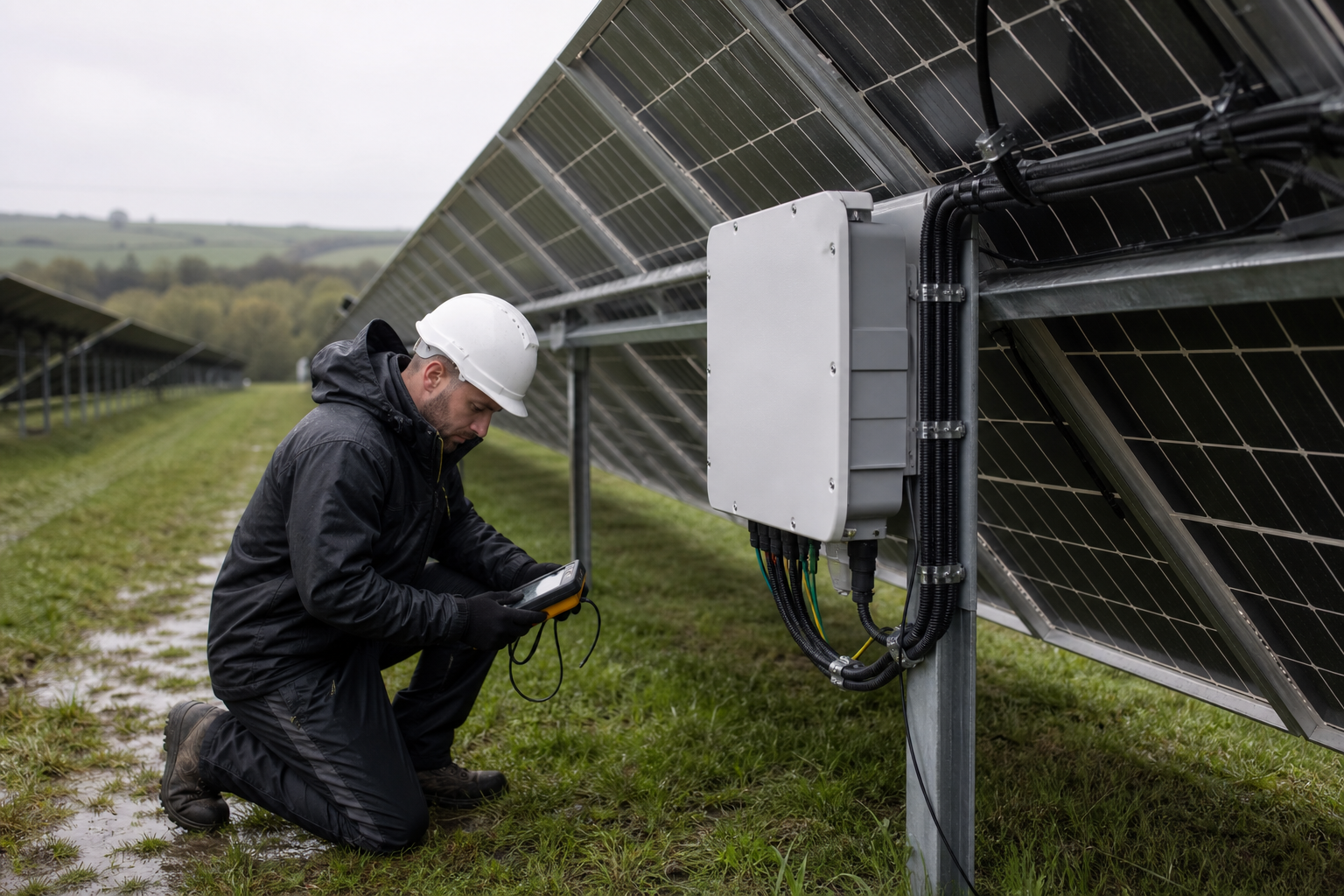
What should a ground-mounted solar maintenance plan cover?
The right maintenance programme depends on the system, site conditions, manufacturer requirements and how critical the solar supply is to the business. A useful plan may cover:
- remote monitoring and investigation of unexpected generation changes;
- visual inspection of modules, frames, fixings and cable management;
- electrical inspection and testing at suitable intervals;
- checks on isolators, enclosures, inverters and distribution equipment;
- vegetation management beneath and between panel rows;
- inspection of access tracks, drainage, fences and gates;
- cleaning when site conditions and performance evidence indicate it is needed;
- review of damage following severe weather, flooding or nearby site work;
- clear records of faults, test results, repairs and replaced components.
Cleaning should not be treated as an automatic cure for low output. Monitoring and inspection can help distinguish soiling from shading, an inverter issue, an electrical fault or another cause. Any cleaning method should follow the module manufacturer's instructions to avoid damaging glass, coatings, seals or electrical components.
When roof-mounted solar may still be the better option
Maintenance is only one part of a solar decision. Roof-mounted panels use an existing surface and avoid taking up operational or agricultural land. They may also require less vegetation management and can be less accessible to unauthorised people.
A modern, structurally suitable roof with permanent safe access may support a system that is practical to maintain. Conversely, an ageing industrial roof with fragile materials, complex rooflights or limited access could make future inspection more involved.
Ground mount solar also needs sufficient unshaded land, a suitable cable route and an acceptable relationship with existing operations. A quarry, factory, campsite or golf facility may have open space, but that area could also be needed for vehicle movements, expansion, drainage, ecology or customer use.
The most maintainable solution is therefore site-specific. In some cases it may be a roof array; in others, a ground array or a combination of solar locations will make better use of the available electrical capacity and space.
Designing for Cornish site conditions
Solar installations in Cornwall can face exposed weather, wet ground, coastal conditions and constrained rural access. These factors should inform equipment selection, mounting design and the maintenance plan.
For a ground-mounted installation, practical questions include:
- Will technicians be able to reach the equipment throughout the winter?
- How will water move across the site and around foundations or access tracks?
- Could hedges, trees or future planting shade the array?
- Is there enough space for vegetation and habitat management?
- Will livestock, machinery or visitors come close to electrical equipment?
- How will the system be inspected after severe weather?
- Can major components be replaced without disturbing unrelated site operations?
Planning requirements also need early consideration. Cornwall Council advises that the status of standalone solar depends on matters including its size, position and the site's planning designations. Larger commercial installations will require a project-specific assessment, with potential landscape, ecology, access and land-use considerations.
So, is ground-mounted solar better for maintenance?
Often, yes. Ground-mounted panels can provide safer and more direct access for inspections, fault finding and repairs. They can be particularly practical where the available roofs are fragile, shaded, congested or likely to require replacement during the solar system's life.
However, the advantage depends on good design. Adequate row spacing, sensible equipment locations, durable cable protection, drainage and a realistic vegetation plan should be built into the project from the beginning.
Maenporth Electrical Ltd provides practical solar and electrical support for commercial, industrial and larger rural sites across Cornwall. To discuss whether a ground-mounted, roof-mounted or combined solar installation would suit your premises, call 01326 250297.