
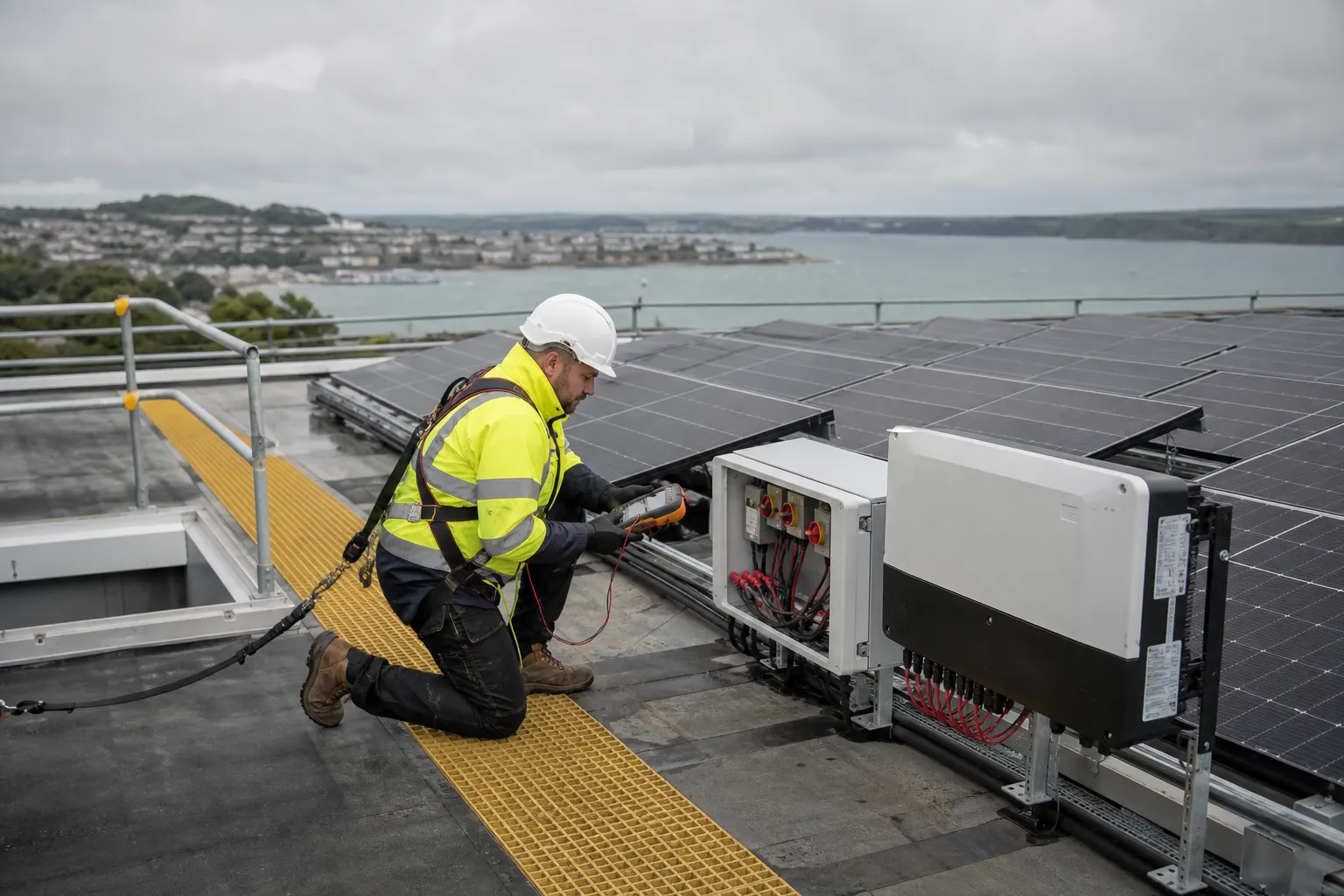
Maenporth Electrical Ltd is listed in the official MCS installer directory with certification for Solar PV. For organisations comparing options for a Falmouth commercial solar project, that independently recorded status provides a useful starting point: it evidences certification against the relevant MCS scheme requirements for the stated technology.
It does not, however, make every building or piece of land suitable for solar. Nor does it provide automatic planning consent, guarantee a grid connection or secure an export tariff. Those distinctions are particularly important for factories, holiday parks, leisure facilities, quarries and larger rural sites, where generation may need to be considered alongside existing electrical infrastructure and future demand.
The update and what Maenporth Electrical’s MCS scope covers
MCS describes itself as a quality scheme covering small-scale renewable products, installers and installations. Maenporth Electrical’s verified installer scope is Solar PV. It should not be read as certification for battery storage, heat pumps or another renewable technology unless that separate scope is also confirmed in the official directory.
For a site owner looking for an MCS certified solar installer Falmouth businesses can speak to locally, the credential helps establish that the contractor has been assessed against the scheme requirements relevant to Solar PV. Maenporth Electrical’s Solar PV services can therefore form part of an early discussion about the proposed installation and the site’s wider electrical needs.
MCS certification is not compulsory for every type of commercial solar project. The appropriate route can vary with the installation, contractual requirements and any incentive or export arrangements being considered. Its value here is as a clearly defined, independently verifiable capability rather than a blanket promise about project suitability.
Why the 18 June 2026 MIS 3002 update matters
The current installation standard is MCS MIS 3002 Issue 6.0. It was published on 18 March 2026 and became mandatory for contractors certified to that standard on 18 June 2026.
That timing matters when proposals, specifications or contractor information refer to an older edition. Decision-makers should establish which current requirements apply instead of relying on a historic badge, screenshot or superseded wording. The definitive detail is set out in the MCS MIS 3002 Solar PV Systems Issue 6.0 standard.
This does not mean every proposal will look the same. A system still has to respond to the building, electrical installation, proposed generating equipment and intended use of the energy. The standard provides a current quality framework; it does not replace engineering judgement or site-specific investigation.
What certification can give a Falmouth site owner confidence about
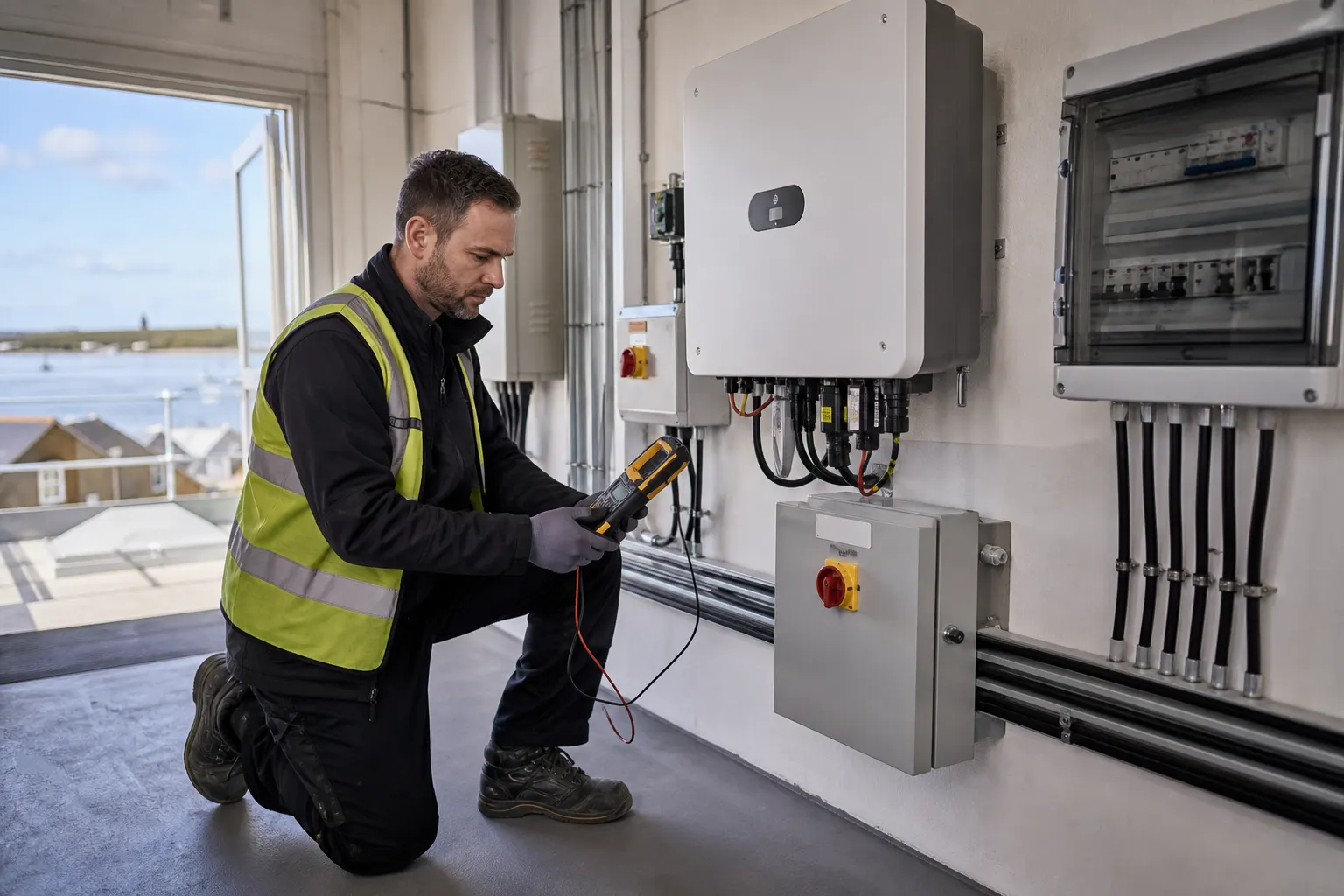
The practical benefit of checking certification is that it separates a defined, assessed Solar PV scope from a general claim that a business “does solar”. It also provides a clearer basis for asking what standards, products, records and handover information will apply to a proposed installation.
When comparing proposals, certification can support confidence that:
- the installer’s stated Solar PV scope can be checked independently;
- the work is covered by the current MCS framework relevant to that scope;
- the proposal should be discussed with reference to applicable design and installation requirements;
- commissioning and project documentation are treated as substantive parts of the installation rather than optional extras;
- the installer’s credential can be checked at the point a purchasing decision is made.
That final check matters because certification is a current status, not a permanent claim based on an old website badge.
What MCS certification does not decide
A certificate cannot establish whether a roof is structurally suitable, in good enough condition or likely to require disruptive work during the life of the array. Those questions need appropriate site investigation and, where required, specialist structural input.
It also does not determine whether planning permission is needed. The planning position can depend on the site, installation type, location and applicable restrictions. Ground-mounted arrays, sensitive locations and substantial commercial proposals may raise different considerations from a straightforward installation on an existing roof.
Other matters that remain project-specific include:
- the condition and capacity of the existing electrical installation;
- the site’s demand profile and how much generation can be used locally;
- cable routes, switchgear, metering and distribution arrangements;
- safe access, isolation, fire considerations and long-term maintenance;
- the need for structural, planning or landlord approvals;
- the DNO connection or notification route;
- separate battery storage requirements;
- export metering, supplier eligibility and tariff terms.
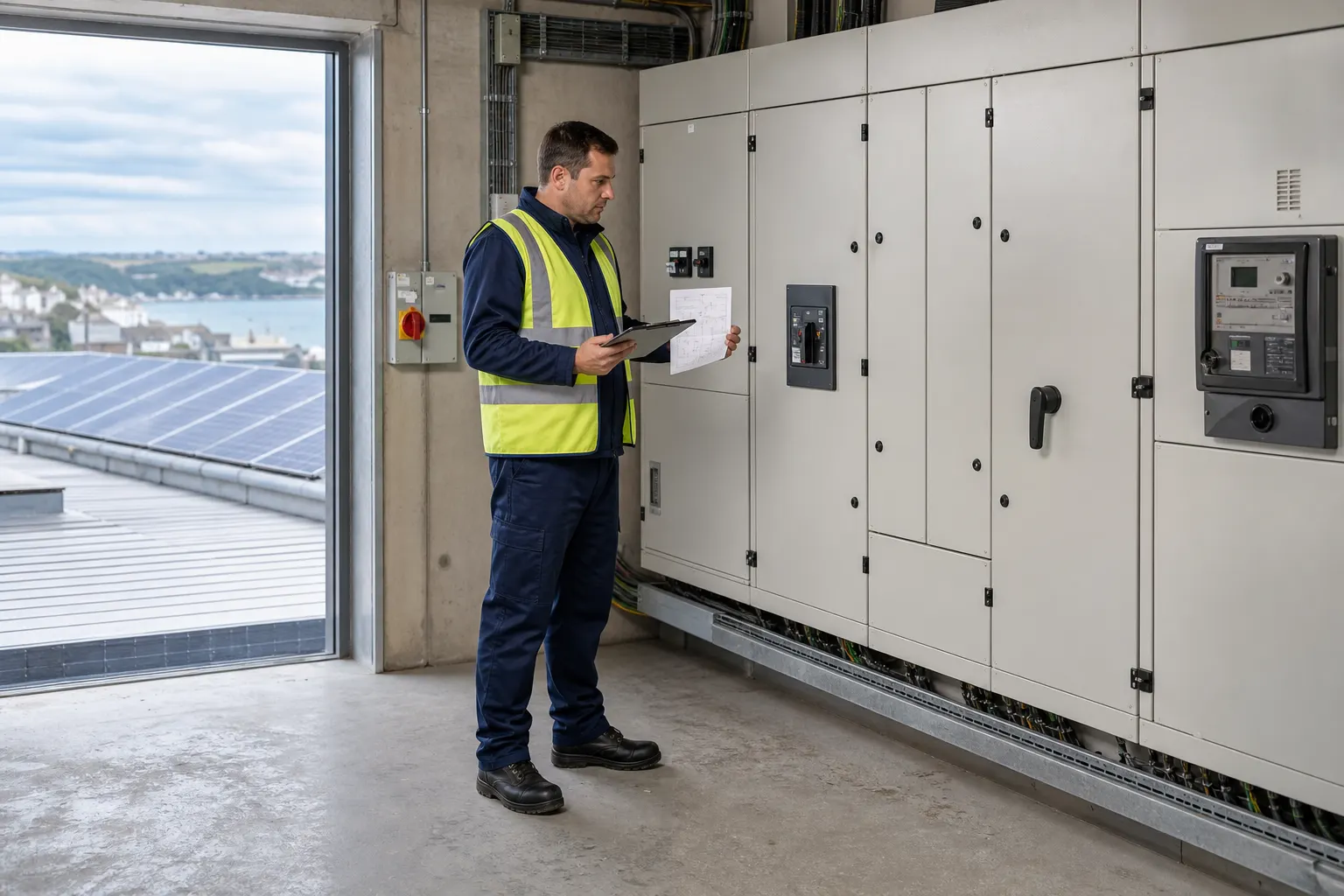
On a complex site, the solar array should not be treated as an isolated package. Existing distribution equipment or operating constraints may influence what can be installed and how the project should be phased.
Grid connection is a separate early-stage question
In Cornwall, National Grid Electricity Distribution is responsible for the relevant generation connection processes. New solar, battery and combined generation installations follow G98- or G99-related routes according to factors including the generating equipment, aggregate capacity, phase arrangement, type-testing and site circumstances.
This should not be reduced to a rule based on panel quantity. National Grid Electricity Distribution identifies G99 as the route for installations above 16A per phase and for systems that do not meet current G98 requirements. Some smaller installations can use simplified processes, but the correct route still needs to be confirmed for the actual proposal.
For a factory, quarry, holiday park or larger rural site, early DNO consideration can prevent the design from being built around an unsupported assumption. The existing import connection does not automatically establish how much generation can be connected or exported.
Export limitation may sometimes form part of a viable connection solution, but it is not an automatic workaround. The equipment and control arrangement can require its own application, approval and commissioning process. Sites considering generation alongside new machinery, EV charging or expansion should also examine their industrial distribution systems as part of the wider capacity picture.
Documents and decisions to clarify before proceeding
A useful early project discussion should establish what is known, what must be surveyed and who is responsible for each approval. Before committing to a Solar PV installation, a site owner may need clarity on:
- Project objectives: whether the priority is on-site consumption, carbon reduction, export, resilience or preparation for future loads.
- Site evidence: available electricity bills, interval data, distribution information, roof records and details of planned operational changes.
- Technical scope: proposed generating capacity, equipment, cable routes, isolation, metering and integration with the existing installation.
- External approvals: the applicable DNO route and any planning, structural, landlord or insurer requirements.
- Handover information: commissioning records, operating information, warranties and arrangements for future inspection and maintenance.
- Export arrangements: whether Smart Export Guarantee eligibility is relevant and what the chosen supplier requires.
The Smart Export Guarantee covers eligible small-scale low-carbon generation in Great Britain, including Solar PV up to 5MW. However, suppliers set their own rates, contract terms and eligibility requirements. MCS certification may support the required evidence, but it does not guarantee acceptance or income.
When to speak to Maenporth Electrical
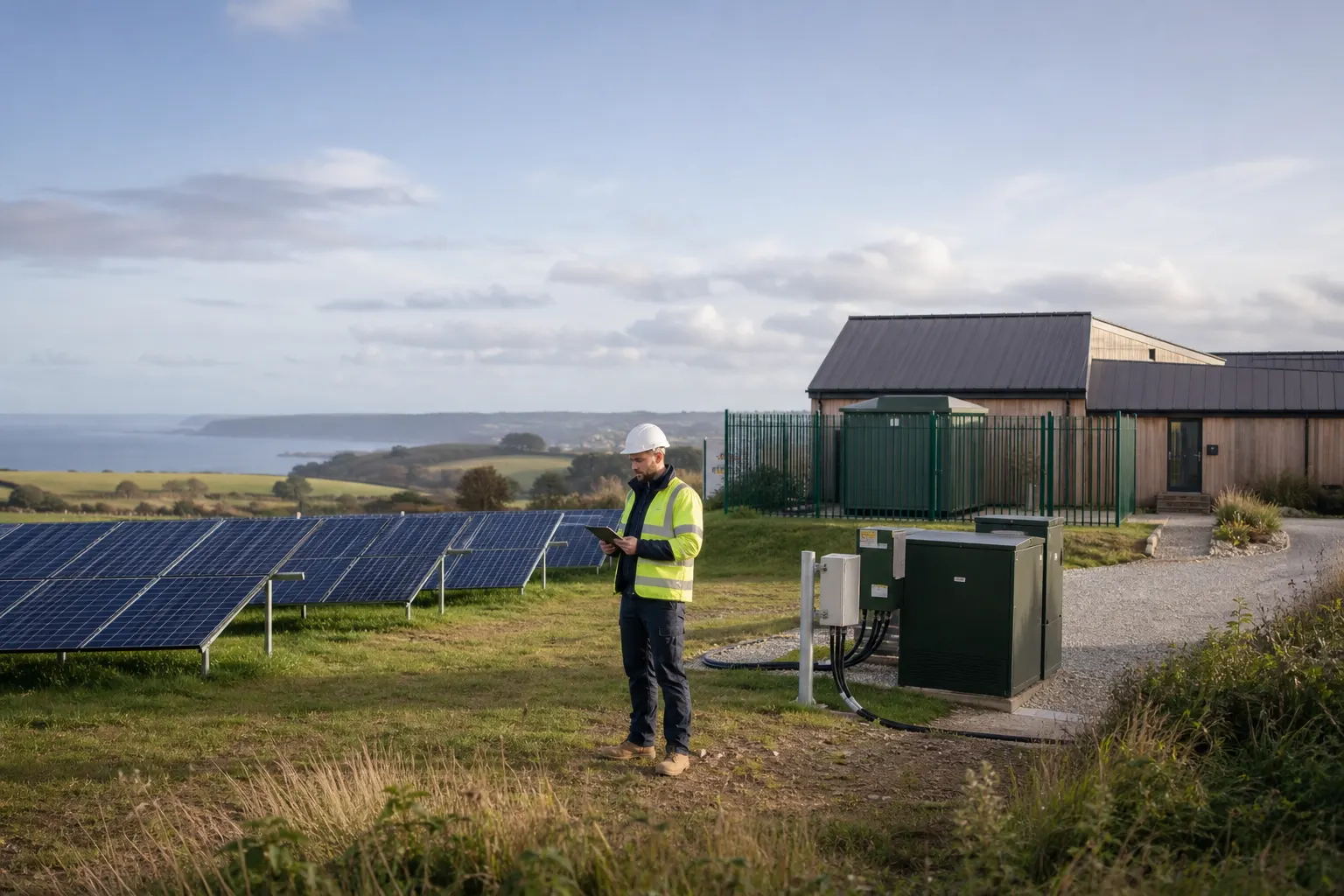
The best time to discuss solar is before generation capacity, equipment locations or expected export income have been treated as fixed. Early electrical input is especially useful where a Falmouth site has three-phase distribution, substantial daytime loads, older switchgear, planned EV charging, battery ambitions or future machinery to accommodate.
Maenporth Electrical serves Falmouth, Penryn and the wider Cornwall area, with a practical focus on commercial, industrial, leisure and larger rural sites. To discuss Solar PV certification, the condition of existing infrastructure or the electrical questions around a proposed project, call 01326 250297.